Skip to content

UW Medicine Neurology on Pace to Transform Rural Health

For Thabele (Bay) Leslie-Mazwi, MD, the UW Medicine Department of Neurology is more than the only group of academic medicine specialists providing neurological services to Washington state and the Pacific Northwest. It’s a team of providers uniquely positioned to transform care for the thousands of people living in the area’s most remote locations.

Located in the WWAMI (Washington, Wyoming, Alaska, Montana, Idaho) region, UW Medicine serves patients across 27% of the nation’s landmass. Many of these people live in rural spots with limited access to care. Consequently, they face more health challenges than urban residents.

Tabele Leslie Mazwi, MD
Thabele (Bay) Leslie-Mazwi, MD

“For rural populations in America, the picture of healthcare is not a good one. They have higher mortality and chronic disease rates than urban groups, and their life expectancy is lower,” says Leslie-Mazwi, chair of the Neurology Department. “They suffer from issues of health equity on an immense scale because they simply don’t have enough access to care.”

Boosting access is where the Neurology Department can make the biggest impact, he says. By using their expertise in clinical care, research and education, providers can change how patients receive life-altering or life-saving care.

Reaching more patients

Truly moving the needle on neurological care means investing in methods that can deliver timely services to more patients. The question, Leslie-Mazwi says, has been how to do it.

“Figuring out how to provide access to specialty care to all these people in all these places is the challenge,” he says. “It boils down to dividing our efforts into two categories: bringing the patient to us and taking care to the patient.”

  • Transporting patients: Through UW Medicine’s partnership with Airlift Northwest, providers can transport patients experiencing cerebrovascular, neurotrauma and neurocritical care emergencies directly to one of three landing pads on top of the Harborview Medical Center. This 24/7 service, including five helicopters and four jets stationed across the region, transported almost 500 patients needing emergent or urgent neurological care in 2022, among the thousands of patients transported to UW Medicine in Seattle. “Some of these patients are flying for six hours in one of our fixed-wings to reach our services,” says Leslie-Mazwi.
  • Taking care to patients: Fortunately, not every case is an emergency. In these instances, providers use three strategies to meet patients where they live.
    • Travel: Providers from UW Medicine Neurology travel to remote communities —from the Olympic Peninsula to Alaska to Idaho — to meet patients where they are, in concentrated clinics held in partnership with health centers in these locations.
    • Telehealth:Many providers take themselves to the patient’s location virtually. Through video consultation and telestroke services using telemedicine, they can connect with the patient directly or with the referring provider.
    • ProjectECHO:Instead of working directly with patients, UW Medicine providers meet virtually with physicians in rural areas to discuss cases. Currently, 68 remote sites connect for provider-to-provider video consultation programs covering dementia, multiple sclerosis, autism and other conditions. It’s an opportunity for rural physicians to ask patient-centered questions, Leslie-Mazwi says.

“When these clinicians share their cases, we have the chance to enhance the expertise and knowledge within the provider community,” he says. “We’re not providing direct patient care, but we’re informing clinicians about what to do in these situations, in a collaborative and inclusive learning environment. This is a data-driven method to efficiently enhance patient outcomes.”

Expanding neurological research

Part of the health inequity rural populations experience stems from their lack of opportunities to participate in research. Large urban hospitals typically conduct clinical studies, including those focused on neurological conditions. As a result, patients in remote locations may not have access to new medications or therapy options under investigation.

UW Medicine neurologists hope to open this door for more people in remote locations.

“One of the things we are working on doing better — and doing more of — is including rural populations directly in our research,” Leslie-Mazwi says. “We need to do a better job of understanding what these communities face. Telehealth is a crucial part of this effort.”

Training the next generation of physicians

The department is also dedicated to changing the future face of neurological care. That effort means giving residents and fellows hands-on experience in providing services in rural locations.

“We consider our entire land region an immense classroom for our trainees,” Leslie-Mazwi says. “We have multiple sites where our trainees can interact with and learn from more than 200 courtesy clinical neurology faculty, who provide extraordinary neurological care in a range of environments.”

These faculty are invited to participate in department activities, like Grand Rounds, and host UW Medicine trainees in their local centers.

Taking on additional challenges

Increasing rural access to care isn’t a challenge UW Medicine neurologists tackle for the WWAMI alone, though finding answers to these problems will transform healthcare delivery in the WWAMI region’s rural locations. The ultimate impact has the potential to reach much farther.

“I remind our faculty that the neurological solutions we’re testing, refining and disseminating are solutions that can be applied in most areas of the world, where there are a limited number of neurological experts and large geographies that need care,” Leslie-Mazwi says. “I feel like we’re all part of something bigger than our work at UW Medicine alone. We strive to take on challenges and find solutions that will have an impact globally.”

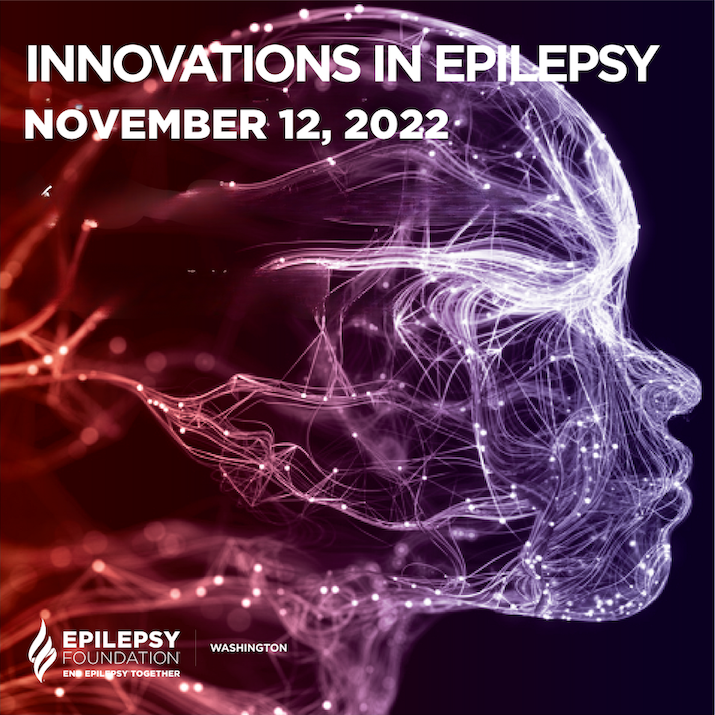
Innovations In Epilepsy Conference

After 2 years of going virtual, we are thrilled to bring you the Innovations in Epilepsy Conference in-person! Join us on Saturday, November 12 at Seattle Children’s Hospital for this annual conference. We have great presenters and topics planned that you don’t want to miss! Featuring UW Medicine’s Dr. Holmes and Dr. Kim!

Can’t join us in-person? Not a problem! All registrants will receive a link a few days before to watch the Conference streamed live! Registration is OPEN so sign up today! https://e.givesmart.com/events/t9Q/

Mapping the whole human brain: Allen Institute to lead global collaboration

None

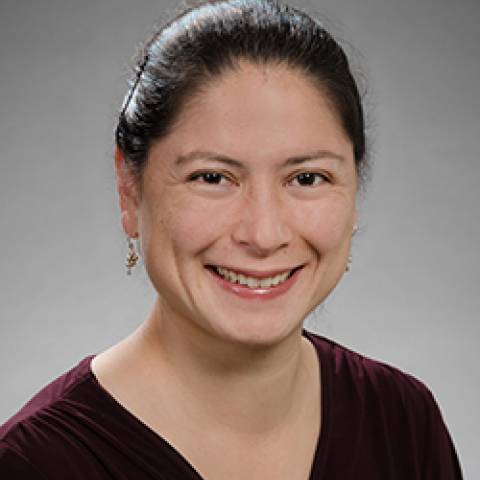
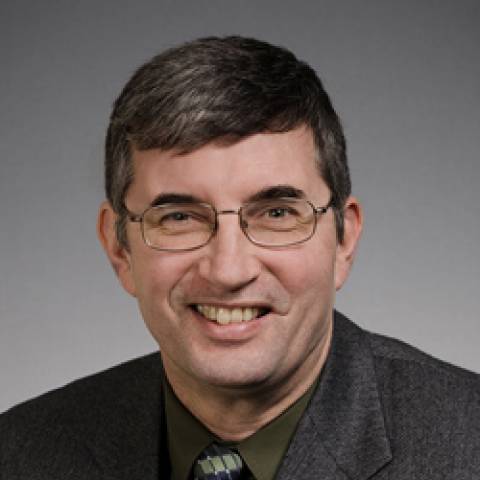
Scientists at the Allen Institute are launching the brain equivalent of the Human Genome Project, leading a new global collaboration to map the approximately 200 billion cells in the human brain by their type and function. The work and research of Dr. Kimiko Domoto-Reilly [uwmedicine.org] and Dr. Thomas Grabowski [uwmedicine.org] are featured in this global project, in addition to Dr. Christine Mac Donald in the Department of Neurological Surgery at UW

The collaboration is funded by the National Institutes of Health’s Brain Research Through Advancing Innovative Neurotechnologies® (BRAIN) Initiative as part of The BRAIN Initiative® Cell Atlas Network, or BICAN, and will also build detailed atlases of macaque and marmoset brains. Led by Ed Lein, Ph.D., Senior Investigator at the Allen Institute for Brain Science, a division of the Allen Institute, and Hongkui Zeng, Ph.D., Executive Vice President and Director of the Allen Institute for Brain Science, the human and primate atlas grant project also includes sub-projects led by researchers from 17 other institutions in the U.S., Europe and Japan.  

“We are aiming to create something transformative for the field that can only be done collaboratively, by bringing in an all-star cast of experts from a variety of disciplines,” Lein said. “This is critical work: We need to understand the human brain better if we hope to treat diseases of the brain, and specifically we need a better understanding of brain function and structure. The cell atlases we’re building with the support of the BRAIN Initiative promise to lead to a more rapid understanding of the basis of many brain diseases.”

Provider headshot of Kimiko Domoto-Reilly M.D., M.S.
Provider headshot of Thomas Grabowski M.D.

To read the full article featuring UW Medicine’s Dr. Kimiko Domoto-Reilly, and Dr. Thomas Grabowski please visit the link below:

https://alleninstitute.org/what-we-do/brain-science/news-press/articles/mapping-whole-human-brain-allen-institute-lead-global-collaboration

Congratulations to Gloria von Geldern MD FAAN

Congratulations to Gloria von Geldern MD FAAN [uwmedicine.org], Associate Professor of Neurology at the UW MS Center [uwmedicine.org], for graduating from the American Academy of Neurology (AAN) Women Leading in Neurology program this month. This national AAN leadership program for mid-career neurologists empowers women to advance to the top levels of leadership in their fields and within AAN and helps create a peer network of female neurologists. Interested in quality training and personalized coaching and mentoring? Apply now: https://bit.ly/3dlUfvS [bit.ly].

Parkinson’s Disease

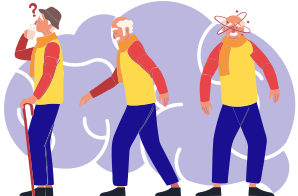
Parkinson’s disease is a progressive nervous system disorder that affects movement. This neurodegenerative disorder affects cells in a specific area of the brain. According to the Centers for Disease Control and Prevention (CDC), the associated symptoms make Parkinson’s disease the 14th cause of death in the United States.

Parkinson’s disease causes stiffness or slowing of movement. It can start so gradually that it is often missed at the early stages. Empowering you and your family with information can help your family get an earlier diagnosis. This article will cover what to expect regarding Parkinson’s disease causes, symptoms, stages, diagnosis, and treatments.

Parkinson’s Disease

To read the full article, please visit the link below:

https://pacificmedicalacls.com/parkinson-disease

She once thought becoming a doc wasn’t possible

Dr. Jamie Wright, diagnosed with hydrocephalus as an infant, begins her second year as a UW Medicine neurology resident.

Jamie Wright assisting hydrocephalus surgery with Drs. Morris and Sandberg in Haiti 2015

“I think she’s a good addition to the program,” said Dr. Michael A. Williams, director of the UW Medicine Adult and Transitional Hydrocephalus Clinic and professor of neurology and neurological surgery at the UW School of Medicine.  “She’s got an M.D./Ph.D, something not a lot of young people with hydrocephalus have been able to do.”

Wright is now beginning the second year of the intensive four-year training program. Asked how unusual it is for someone with hydrocephalus to be training as a neurology resident, Williams said: “I don’t know of anyone else. I know of some patients in other professions such as the law, but I don’t know of anyone in a neurology residency.” 

Her decision to pursue medicine as a career was in some ways a surprise even to her. 

To read the full article featuring UW Medicine’s Dr. Jamie Wright, please visit the link below:

https://newsroom.uw.edu/postscript/she-once-thought-becoming-doc-wasnt-possible

She Had Seizures All Her Life —  Brain Surgery Cured Her

Melissa Hunter was used to having occasional seizures — she’d been diagnosed with epilepsy as a child, but medication kept the condition at bay. When she was in her late 20s and decided to try for a child, doctors in Portland, where she lives, recommended switching her epilepsy medication. The switch caused her condition to worsen, leading to a seizure behind the wheel, a hospital stay, a long recovery, and more frequent seizures. She knew something had to change. In 2015, she decided to undergo brain surgery. She has been seizure-free ever since. This is her story, as told to McKenna Princing. 

I’ve battled epilepsy my whole life. I always lived a normal life with medication: the only time I’d have a seizure was if I forgot to take my meds. 

The trouble started in 2006, when my husband and I decided we wanted to start having kids. The medication I’d been taking most of my life was deemed unsafe for me to take during a potential pregnancy, so my doctors in Portland switched me to different medications.

To read the full article featuring UW Medicine’s Dr. Nicholas Poolos, please visit the link below:

She Had Seizures All Her Life —  Brain Surgery Cured Her

Run For The Hills 5K & Fun Run

Meet Bryan – a man with a mission to face a diagnosis of early onset Parkinson’s disease (PD) with fitness and connection.

Opening up about a diagnosis of early onset PD at age 31 was an obstacle in and of itself. Doing so has proven an empowering way to create awareness for Parkinson’s, and to support his family to live an honest and fulfilling life. Bryan’s impactful actions open doors to connect with others who walk similar roads.

Join in helping Bryan Hill support The Michael J. Fox Foundation for Parkinson’s Research. Saturday, August 27, 2022 at 9am University of Washington Husky Track Seattle, WA

To read more about Bryan and support him, visit the link below:

https://fundraise.michaeljfox.org/tf-2022/movewiththehills